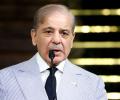
Pakistan's Prime Minister Shehbaz Sharif on Thursday thanked United States President Donald Trump for the 'historic' trade agreement reached between Islamabad and Washington, and expressed hope that it would expand cooperation between the two nations.

India should simultaneously prioritise domestic exploration and production of more oil and gas in the country, and ensure we retain diversified suppliers for imports, points out former foreign secretary Ranjan Mathai.
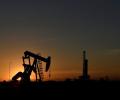
India on Tuesday opened its largest oil and gas bid round, offering 25 blocks covering 1.91 lakh square kilometers mostly in offshore area, as the government looks to boost domestic production to cut imports and help energy security. Petroleum Minister Hardeep Singh Puri launched the 10th bid round under the Open Acreage Licensing Policy (OALP) at the India Energy Week (IEW) in Mumbai.
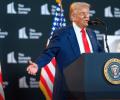
Trump said California has been particularly "hard hit" because of this, blaming democrat Gavin Newsom, the Governor of California, for this loss, calling him "weak and incompetent."

The 2025 US National Security Strategy marks a major pullback, with America turning backward and effectively allowing China greater dominance in Asia. while long-time partners like India are left to face an increasingly unstable global order largely on their own, observes Rajeev Srinivasan.

State-run Indian Oil Corporation (IOCL) reported a weak performance in the fourth quarter of FY24 (January-March 2024), and the turmoil in the energy market indicates it could endure another lacklustre quarter. The oil marketing company (OMC) reported an Ebitda of Rs 10,400 crore, down 27 per cent year-on-year (Y-o-Y) due to weak reported gross refining margin (GRM) of $8.4 per barrel in Q4FY24, which was almost half the consensus expectation of $15 per barrel.

The under-realisation on fuel sales incurred by the oil marketing companies is projected to rise by 14 per cent to around Rs 760 crore (Rs 7.6 billion) per day in the first fortnight of July from Rs 680 crore (Rs 6.8 billion) per day in the second fortnight of June.

India is expected to ramp up its purchase of crude oil from the United Arab Emirates (UAE) in the coming months following discussions between the two countries on the sidelines of the ongoing COP28 summit in Dubai, multiple sources in the know said. The UAE has historically been India's third-largest source of crude. It has suffered the largest drop in shipments since Indian refiners began to binge on Russian crude in 2022.
The government has issued 6.35 per cent Oil Marketing Companies Government of India Special Bonds, 2024 for Rs 22,000 crore (Rs 220 billion) to three oil marketing companies.

From the Sensex pack, Reliance Industries, Bajaj Finserv, HDFC Bank, Adani Ports, Maruti Suzuki India, Axis Bank, Hindustan Unilever, Sun Pharmaceuticals and Asian Paints were among the laggards. Reliance Industries fell the most by 2.38 per cent to close at Rs 1,171.10 apiece.
The retail losses that the country's oil marketing companies incur on sale of petrol, diesel, cooking gas and kerosene at subsidised prices have risen by 7.3 per cent to around Rs 440 crore (Rs 4.4 billion) per day in the fortnight ended March 31.IOC lost Rs 17 for every litre of petrol it sold, up from Rs 14.65 a litre on March 15. It lost Rs 316 per 14.2-kg cylinder, compared with Rs 303.65 per cylinder in the previous fortnight.

From the 30-share blue-chip pack, IndusInd Bank, NTPC, UltraTech Cement, Sun Pharma, Axis Bank, State Bank of India, Tata Steel, Power Grid, Adani Ports and Kotak Mahindra Bank were among the major laggards. Tata Consultancy Services jumped nearly 6 per cent after the IT services company reported an 11.95 per cent jump in the December quarter net profit to Rs 12,380 crore. Tech Mahindra, HCL Tech, Infosys and Bajaj Finserv were the other big gainers.

In an eventful week ahead, stock market investors will take cues from major events like the US Federal Reserve's interest rate decision, the upcoming Union Budget and Q3 earnings, analysts said.

'The universe of PSU stocks is huge and diverse.' 'Investors should bet on specific sectors and stocks from the basket as most of them may continue to consolidate after years of outperformance.'
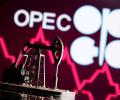
The surprise decision of OPEC and its allies, including Russia, to cut oil output may cause an immediate rise in prices, delaying revision in fuel prices in India, industry sources said. The grouping of Organisation of Petroleum Exporting Countries (OPEC) and its allies, called OPEC+, on Sunday decided to further cut oil output by around 1.16 million barrels. The move led to Brent rising by almost 6 per cent to $84.58 per barrel on Monday.
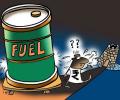
India has taken up the issue of high oil prices with producer nations and OPEC, demanding affordable rates, Minister of State for Petroleum and Natural Gas Rameswar Teli told the Lok Sabha on Monday. Petrol and diesel prices have shot up to record highs across the country after relentless price increases since early May. Petrol is retailing above Rs 100 a litre in more than a dozen states.

'The President's expectations shifted. The goal post moved and India didn't realize that the goal post had moved.'
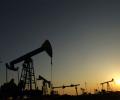
A resurgence in Saudi Arabian supplies of crude oil to India coupled with an attack on an Iraqi tanker in August carrying crude to Europe may result in improved bargaining power for India with West Asian and Russian suppliers for winter supplies. Shipments of Saudi oil rebounded in September from August, surging to the highest since March while Russian oil shipments rose marginally as Saudi Arabia tried to claw back market share in Asia, according to industry sources and ship tracking data.
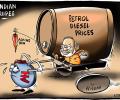
Price of international crude oil - the raw material for making petrol and diesel - dropped to a three-year low before marginally recovering but a revision in domestic petrol and diesel rates is likely only if lower rates are sustained, industry sources and officials said. Global oil benchmark Brent crude futures fell below $70 per barrel on Tuesday - the first time since December 2021 - but gained thereafter after Hurricane Francine hit crude supply in the Gulf of Mexico. Brent rose above $71 a barrel on Thursday while West Texas Intermediate advanced to trade near $68.

Donald Trump's tariffs, meant as political punishment, have avoided the predicted chaos, lifting US growth, weakening rivals, and letting him claim victory in a resilient global economy, observes T T Ram Mohan.
Oil marketing companies IndianOil, Bharat Petroleum and Hindustan Petroleum together blocked nearly 2.9 million LPG connections belonging to customers having more than one connection across states.

State-run oil marketing companies Indian Oil, Hindustan Petroleum and Bharat Petroleum are likely to lose Rs 45,478 crore (Rs 454.78 billion) this fiscal on selling fuel below cost, Petroleum Minister Murli Deora said.
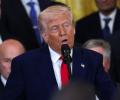
United States President Donald Trump on Sunday warned of new and significantly higher tariffs on Chinese goods if Beijing does not withdraw a recent 34 per cent retaliatory tariff hike, threatening to end all ongoing talks with China.

Brokerages expect a further slowdown in Indian firms' revenue and earnings growth in Q4FY25, following low single-digit growth in the preceding three quarters, as factors like weak consumer demand and credit growth linger on.

In a move that may boost the Indian hydrocarbon industry and bring more investments into the sector, the Union Cabinet on Wednesday decided to give marketing freedom to domestic crude oil producers, allowing them to sell petroleum to any company in the local market. The move is set to be beneficial for major crude oil producers, such as state-run Oil and Natural Gas Corporation (ONGC) and Oil India, and private sector majors like Vedanta's Cairn Oil and Gas and Reliance Industries. As of May 31, India was dependent on imports for 86 per cent of its crude oil consumption; domestic production sufficed the remaining 14 per cent demand.

The exit of Larsen & Toubro (L&T) from the Hyderabad Metro is a long-term positive for the stock. It could be a bullish trigger, alongside higher international orders, and new opportunities in segments like defence and data centres.

The Indian team has returned from the US after holding trade talks with their American counterparts in New York, an official said on Thursday. Commerce and Industry Minister Piyush Goyal, who led the team, will be back on Friday.

GST 2.0 may cushion consumers against US tariffs, but like the 2019 corporate tax cut, it risks being another tactical fix rather than a structural growth strategy, expects Debashis Basu.
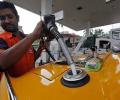
Every dollar increase in crude oil price will add Rs 4,000 crore to the overall underrecovery.

The annual under-recoveries of state-run oil marketing companies have been estimated at Rs 1.1 lakh crore, the government told the Lok Sabha on Thursday.

ICICI Bank jumped 2.76 per cent after the company posted a 15.9 per cent jump in its consolidated net profit for the June quarter to Rs 13,558 crore compared to Rs 11,696 crore in the year-ago period. HDFC Bank climbed 2.19 per cent despite the firm reporting a 1.31 per cent decline in its consolidated net profit to Rs 16,258 crore for the June 2025 quarter. Mahindra & Mahindra, Bharat Electronics, Kotak Mahindra Bank and Tata Motors were also among the gainers.

Corporate earnings from blue-chips like HDFC Bank, ICICI Bank, Donald Trump's swearing-in as the US President, and trading activity of foreign investors are the key factors to drive equity markets this week, analysts said. Trump will be sworn in as the US president for a second term on Monday. This week, several key Nifty-50 companies, including BPCL, HDFC Bank, Hindustan Unilever, Dr Reddy's, UltraTech Cement, JSW Steel and ICICI Bank are scheduled to announce their financial results.

Most pharma shares dropped, dragging the BSE Healthcare index down by 2.14 per cent after Trump's move to impose 100 per cent import tariffs on pharmaceutical drugs from October 1. Wockhardt shares tanked 9.4 per cent.

Petrol pumps in Mumbai, Nagpur and other parts of the state witnessed long queues on Tuesday as people came to fill up their vehicle tanks fearing shortage of fuel amid the protest by truck drivers.

The National Company Law Tribunal (NCLT) on Wednesday deferred the hearing on Vedanta Ltd's proposed demerger to September 17, as market regulator Sebi is yet to complete the scrutiny of the proposal, while the central government has raised certain objections. The matter, which was part-heard earlier, had been adjourned to August 20.

Among Sensex firms, Tata Steel, BEL, Adani Ports, Tata Consultancy Services, Tech Mahindra, Bharti Airtel, HCL Technologies, Trent, Mahindra & Mahindra, Reliance Industries, UltraTech Cement and Larsen & Toubro were the major gainers. However, Power Grid, HDFC Bank, ICICI Bank, Hindustan Unilever were among the laggards.

Fresher hiring grew by 8 per cent driven by non-IT services oil and gas, real estate, and education sectors.
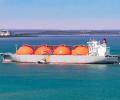
Urals and Sokol accounted for every 4 out of 5 barrels of Russian supplies to India last year.
